History
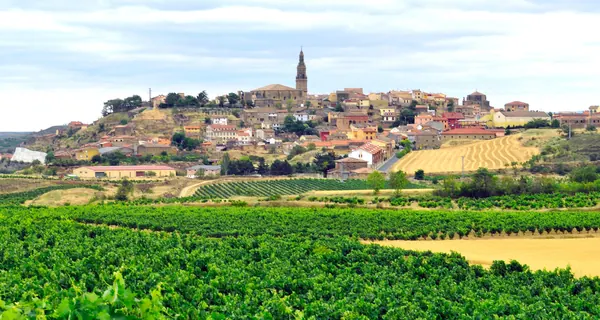
Miguel Merino started out exporting wine in the mid 1970s. The family's site says he always wanted a small bodega of his own, making a little wine to the best quality he could. He found what he wanted in Briones, in Rioja Alta: very old vines, several soil types and a climate with a strong Atlantic influence. The village is a listed historic site, which the family says made it the right setting too. He made his first vintage there in 1994.
In 2017, after training at other wineries, his son and daughter-in-law Érika joined and took charge of the vineyards and the cellar. The site is written by the son in the first person. It talks about carrying on down the road his father started, and enjoying it.
Grapes, vineyards and winemaking
Every vineyard is on a hillside in Briones. They were planted between 1929 and 2001, on different soils and facing different ways. Everything is picked by hand and carried to the winery in small boxes, then sorted again on a table before destemming. Fermentation is in temperature controlled tanks.
The family is open about its plan for the future. Old vines don't live forever, so it plants new vineyards now to have great old vines for its Reservas later. The fruit of those young vines goes into Viñas Jóvenes.
Beyond the wines we list, they make a Gran Reserva in the best years only, La Loma from a 1.4 hectare vineyard planted in 1946, a 100% Mazuelo from the steep, stony La Quinta Cruz vineyard, and La Ínsula, from a tiny pre-phylloxera Garnacha vineyard on sand by the Ebro that fills a single 500 litre cask.
Farming and how it's run today
The family's site doesn't claim organic certification. What it does say is that everything is hand harvested, every plot is in one village, and the next generation is now doing both the growing and the winemaking.
Wines we stock
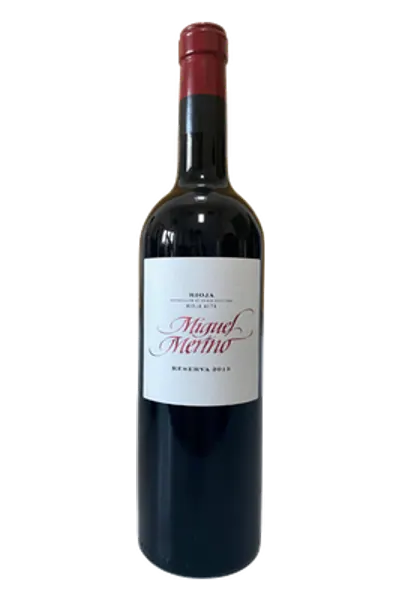
Miguel Merino Reserva comes from Tempranillo with about 4% Graciano, planted in Briones in the 1960s. The family wants balance above all in a Reserva: nothing missing and nothing sticking out. For the 2020 vintage it spent two years in 28 barrels, 70% new, made with American oak staves and French oak heads. That vintage made 7,487 bottles and 378 magnums.
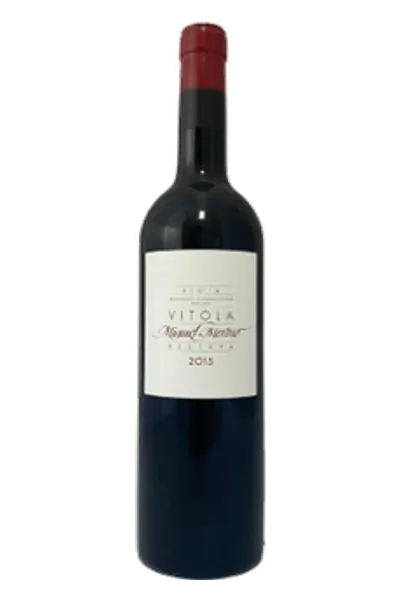
Vitola Reserva comes from vineyards planted in the 1970s and 1980s on higher, cooler slopes. The family says the height and exposure make a subtler Reserva. The 2021 spent two years in 31 French oak barrels, 30% new, and made 9,130 bottles.
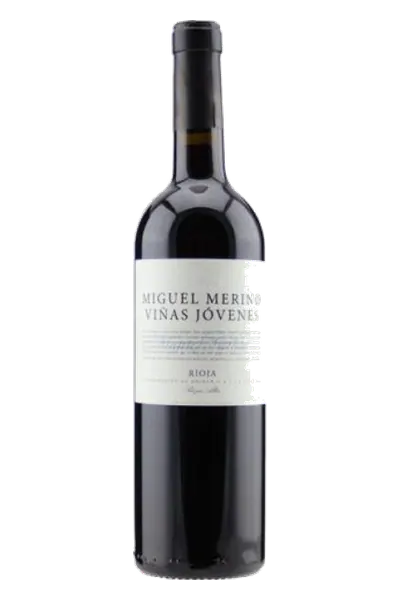
Viñas Jóvenes is the young vines wine: Tempranillo, Graciano and Garnacha from vines 10 to 25 years old. It spends a year in 500 litre casks and in barrels already used for the Reservas. The 2023 made 22,500 bottles.