History
Edmond de Ayala came from a Spanish-Basque aristocratic family and founded the house in Aÿ in 1860. He made his name with dryness. In 1865 he released a "dry champagne" with 21 grams of sugar per litre, at a time when the usual French dosage was over 150 grams. Ayala was a founding member of the Syndicat des Grandes Marques in 1882, the body now called the Union des Maisons de Champagne. Edmond's younger brother Fernand built the brand in England, and Ayala received a Royal Warrant in 1908, after the coronation of Edward VII.
By the 1920s Ayala was making a million bottles a year, among the biggest houses of its day. The house later faded, and the Bollinger family bought it in 2005 to wake what the group calls its "sleeping beauty". A new winery followed in 2007. Hadrien Mouflard became managing director in 2012, moved the style firmly towards Chardonnay and redesigned the labels around the house's old look.
Grapes, vineyards and winemaking
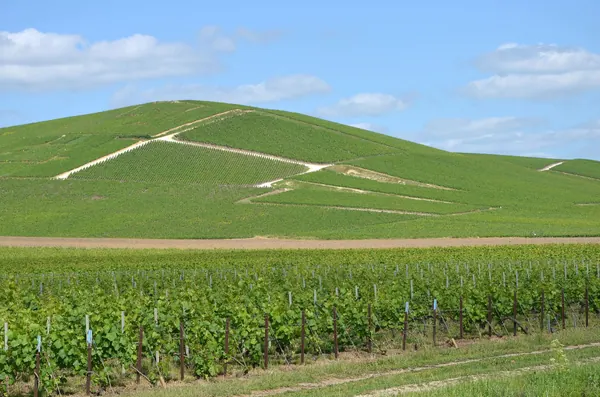
Ayala owns 22 hectares in Aÿ, Dizy, Chouilly, Oger, Champvoisy, Passy-Grigny, Grauves and Vertus. It also buys from nearly 100 grower families. Together that's more than 70 crus across six areas: the Côte des Blancs, Montagne de Reims, Vallée de la Marne, Sézannais, Vitryat and Côte des Bar. Over 50 of those crus are Chardonnay. The house says Chardonnay copes better with warmer summers and keeps its freshness.
Every cru, grape and year is fermented separately in 120 small stainless steel vats, a set-up Ayala calls unique in Champagne. Reserve wines are kept in small vats on site. Everything is made in one place in Aÿ and aged in chalk cellars cut into the hillside, for at least three years on lees.
Farming and how it's run today
The house says 7 hectares are certified High Environmental Value and Sustainable Viticulture in Champagne. It also says all 22 hectares were converting to organic farming, with certification expected by 2025. A trade report from October 2025 says Ayala's own vineyards are certified organic from the 2025 harvest. In 2024 it launched the "Atelier Vignoble" to help its growers farm more sustainably. In 2025 it switched Le Blanc de Blancs to a lighter bottle with a 60% smaller footprint, and it plans to cut emissions at its Aÿ site by 90% by 2030.
Wines we stock
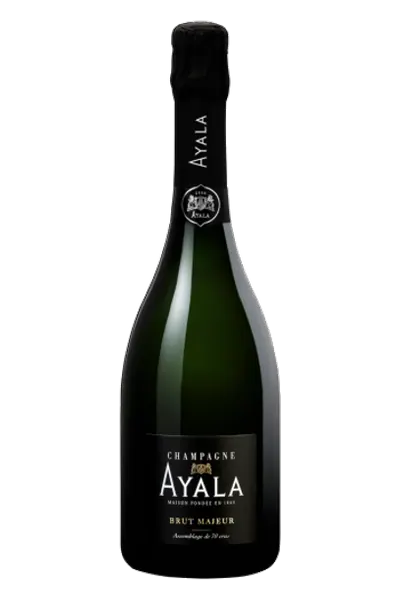
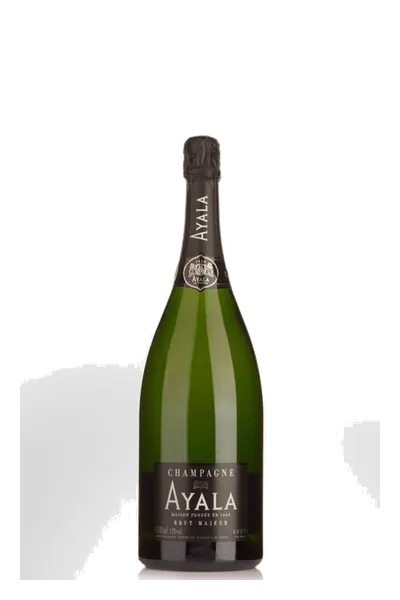
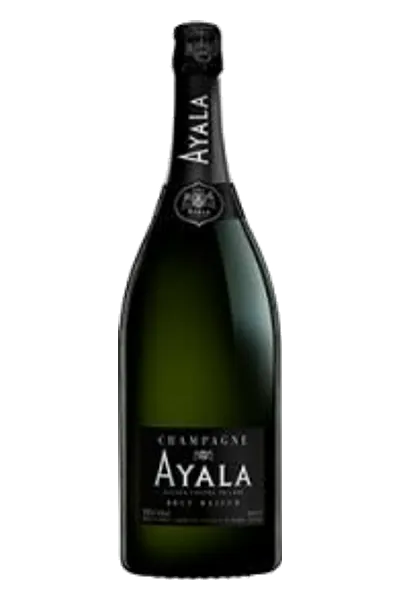
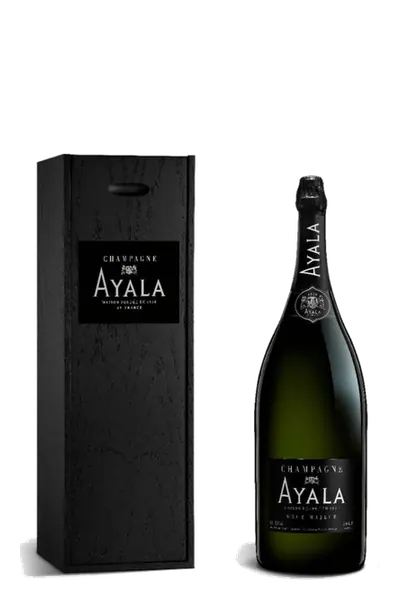
Brut Majeur is the house blend, made from about 70 crus, with Chardonnay the main grape. It's aged at least three years on lees and dosed at 6 grams per litre. We list it by the case, in magnum, Jeroboam and Mathusalem.
Brut Nature has zero dosage. Ayala launched it in 2007 as a tribute to the founder, and says it was among the first houses to make one. It's aged longer to make up for having no sugar.
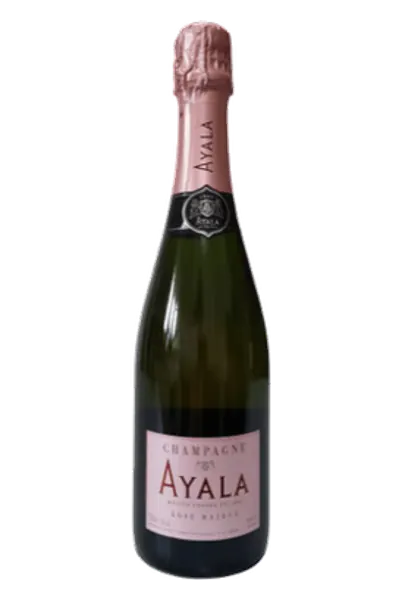
Rosé Majeur blends 24 crus, again led by Chardonnay. Its colour comes from a small amount of still red wine made only from Grand Cru Pinot Noir.
Champagne
Ayala Brut Majeur
Large Format
Ayala Brut Majeur, Champagne, Magnum
Champagne
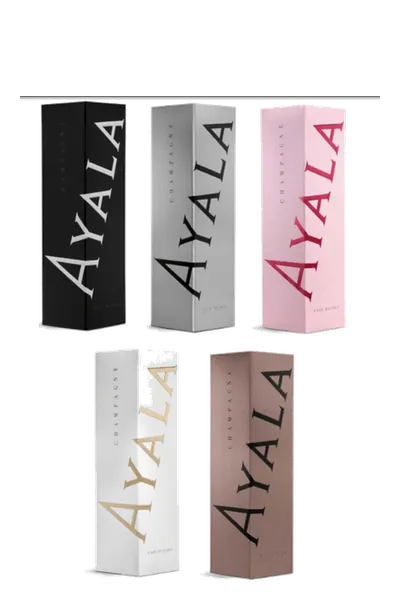
Ayala Brut Nature in Gift Box, Champagne
Large Format
Ayala Brut Majeur Jeroboam in Wooden Box, Champagne
Large Format
Ayala Brut Majeur Mathusalem in Wooden Box, Champagne
Champagne