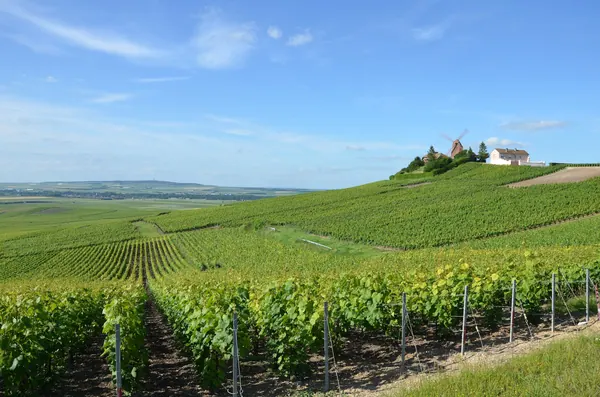
Bollinger was founded in Aÿ on 6 February 1829 and is still family owned. Lily Bollinger ran it from 1941 to 1971, cycling round the vineyards and selling the wine around the world. It has held a Royal Warrant since 1884.
The house farms about 180 hectares, 85% of them Grand and Premier Cru, and grows most of its own grapes. Pinot Noir is the backbone.
Its reserve wines are kept in magnum, around a million of them, as they have been since at least 1890. Many wines ferment in old oak barrels, looked after by the only resident cooper left in Champagne. Special Cuvée is 60% Pinot Noir, 25% Chardonnay and 15% Meunier.
The vineyards
Bollinger was founded as Renaudin-Bollinger & Cie. It farms seven separate vineyards. Five of them grow Pinot Noir around the Montagne de Reims: Aÿ, Avenay, Tauxières, Louvois and Verzenay. Cuis, a Premier Cru village in the Côte des Blancs, gives Chardonnay, and Champvoisy in the Marne Valley gives most of the Meunier.
Two tiny plots in Aÿ, the Clos Saint-Jacques and the Chaudes Terres, have never been hit by phylloxera. The vines grow on their own roots, ungrafted, and are planted “en foule”, in a mass rather than in rows. They are worked entirely by hand and renewed by layering, where a cane is buried to root a new vine. They give the very rare Vieilles Vignes Françaises.
History
The house began with Athanase de Villermont, who inherited land around Aÿ but, as an aristocrat, wasn't allowed to go into trade. He went into business with Joseph “Jacques” Bollinger, a Champagne salesman, and Paul Renaudin, who ran the cellar. Together they founded Renaudin-Bollinger & Cie, and Jacques married Louise-Charlotte Hennequin de Villermont, joining the two families.
Their son Georges Bollinger led the house through the phylloxera years and the First World War, and protected the village of Aÿ from looting in 1916. The Royal Warrant came from Queen Victoria. In 1911 Bollinger's British agent suggested the name Special Cuvée, written the English way with no accent, because “Brut sans année” sounded too plain for the wine.
Georges's son Jacques, a First World War pilot, took over in 1918, built new cellars, bought the offices the house still uses and added vineyards at Tauxières. When he died in 1941, his widow Elisabeth, known as Lily, took over. After the war she toured the world selling the wine. In a 1961 Daily Mail interview she listed all the occasions she'd drink Champagne, and the joke was that it covered every one.
After her came Claude d'Hautefeuille (1971), who modernised the house, then Christian Bizot (1978), who spread its distribution worldwide. Ghislain de Montgolfier (1994) was a great-great-grandson of the founder. In 2008 Jérôme Philipon became the first president from outside the family. The house turns 200 in 2029, and trade press reports that it is already planning for the bicentenary.
In 2010, a stock-take turned up a forgotten vault in the cellars holding bottles and reserve magnums back to 1830. They are now kept in two wine libraries, the Galerie 1829 and La Réserve, opened in 2016.
According to the group's site, Bollinger has been James Bond's official Champagne since 1979. It first appeared on screen in Live and Let Die in 1973.
The Bollinger style
Bollinger names five things behind its style: its own vineyards, Pinot Noir, reserve wines kept in magnum, barrels, and time.
Each year some of the best wines go into magnums, to be kept for blending into Special Cuvée and the Rosé. Bollinger calls this unique in Champagne. The house keeps around 4,000 casks, some nearly 100 years old, and says it is the only Champagne house with its own resident cooper. Riddling is still done by hand on wooden racks, and some disgorging is still done by hand, “à la volée”.
Farming
Bollinger's vineyard was certified High Environmental Value in 2012, and the house says it was the first négociant house in France to get it. It was also the first house certified under the regional Sustainable Viticulture in Champagne scheme. Its own materials report an 85% drop in herbicide use over five years, thanks to grass cover and mechanical weeding.
Since 2012 it has been an Entreprise du Patrimoine Vivant, a French state label for heritage craft skills, and it became a certified B Corp in September 2023.
Special Cuvée and the Rosé
Special Cuvée draws over 85% of its grapes from Grand and Premier Cru vineyards, with reserve wines aged partly in magnum for 7 to 15 years. It spends more than twice the legal minimum time in the cellar, and its dosage is a moderate 6 to 7 grams per litre. Bollinger suggests serving it at 8 to 10°C.
Bollinger Rosé is 62% Pinot Noir, 24% Chardonnay and 14% Meunier. Only 5 to 6% red wine goes in, because it is so powerful. The red comes from the Poirier Saint-Pierre and Montboeuf plots in Verzenay, or from Aÿ depending on the year. Bollinger suggests serving it at 10 to 12°C.
The family group
Bollinger is the family house of the Groupe Bollinger, which is chaired by Étienne Bizot. According to the group's site, it also includes Ayala in Aÿ (founded 1860, joined 2005), Domaine Chanson in Beaune (1750, joined 1999), Langlois-Chateau in Saumur (1885, joined 1973) and Domaine Hubert Brochard in Sancerre (1900, joined 2022).
- Founded
- 1829
- Owner
- the Bollinger family
- Vineyards
- about 180 hectares
- Grapes
- Pinot Noir, Chardonnay, Meunier
- Pinot Noir
- Over 60% of the vineyard
- Royal Warrant
- Supplier to the British Royal Household since 1884
- Certifications
- Vineyard certified High Environmental Value in 2012; B Corp since September 2023
Wines we stock
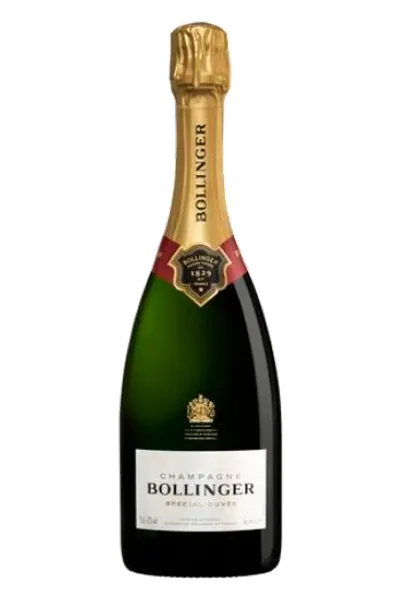
Champagne
Bollinger Special Cuvee, Champagne
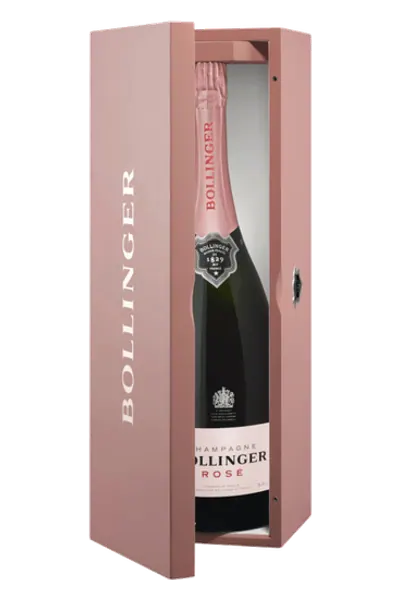
Large Format
Bollinger Rose NV Jeroboam in 'Rose' Wooden Box, Champagne
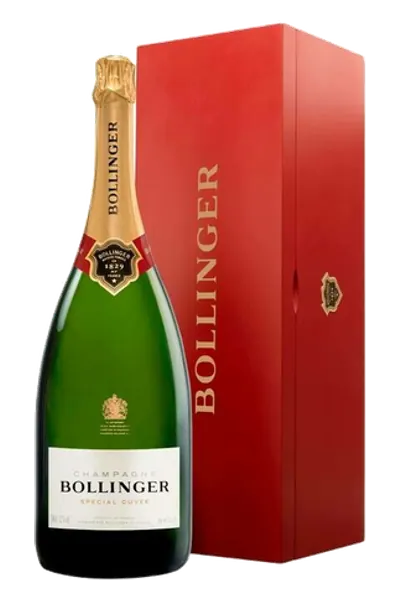
Large Format
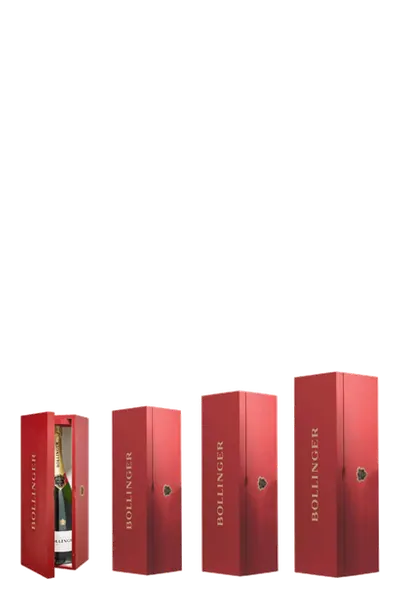
Bollinger Special Cuvee Jeroboam in Red Wooden Box, Champagne
Large Format
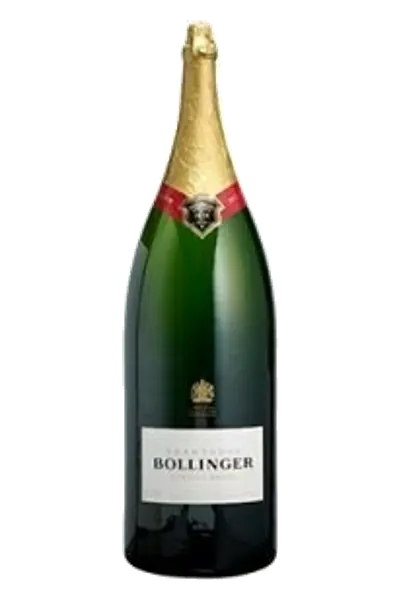
Bollinger Special Cuvee Salmanazar, Champagne
Large Format
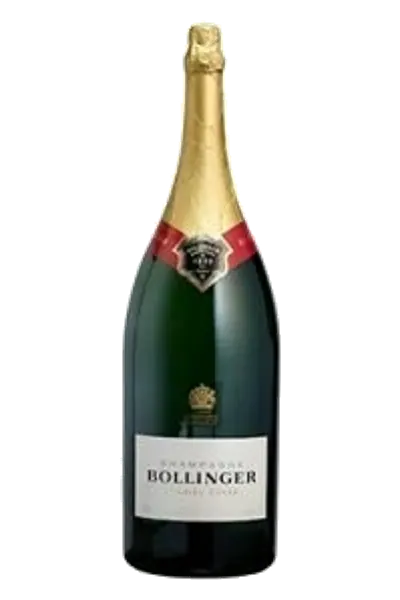
Bollinger Special Cuvee Nebuchadnezzar, Champagne
Large Format
Bollinger Special Cuvee Mathusalem, Champagne
Gift Sets
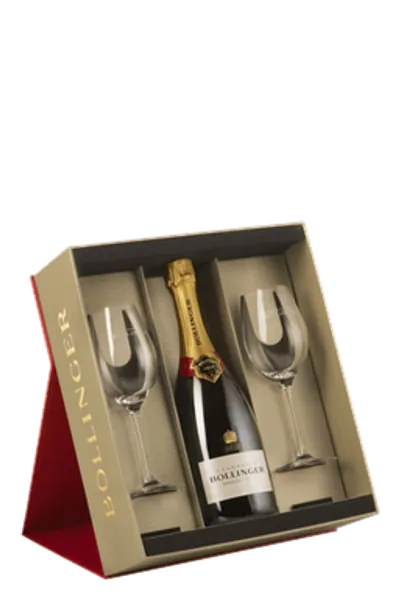
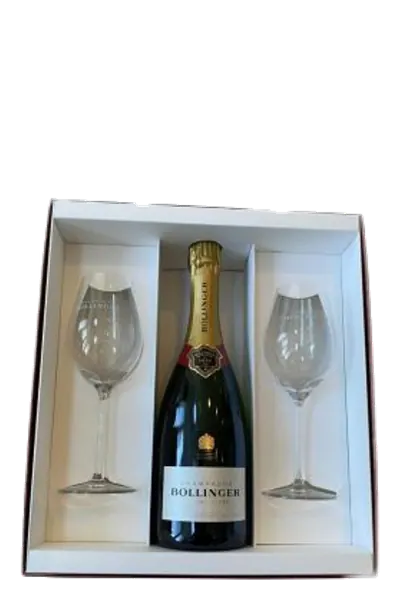
Bollinger Red Gift Box with Two Elizabeth Glasses and Special Cuvee
Gift Sets