History
Jean-Luc Colombo grew up in Marseille, where his mother and grandmother gave him a love of cooking. He says that's what led him to wine, because for him the two can't be separated. He and his wife Anne both trained as pharmacists. He then studied wine at Montpellier and Bordeaux, worked at Bordeaux châteaux, and studied again in Épernay.
He set up as a consultant oenologist in Cornas in 1983. He told Decanter it was hard to make money, because most growers paid him in wine or rabbits. He bought his first vines in Cornas in 1986 and was making wine by 1987. The couple ran a pharmacy in the village too, and in 1993 sold it to buy more vineyards. That meant clearing scrub, rebuilding terraces and planting on the steep slopes. As a consultant he helped push the Rhône towards cleaner, more polished wines.
Anne runs the vineyards and is responsible for sustainability and biodiversity. She was elected president of the Cornas appellation, the first woman to hold the post. Their daughter Laure came back in 2010 after working in the wine trade around the world.
Grapes, vineyards and winemaking
The family has three estates. Domaine des Eygas in Cornas covers 13 hectares of Syrah, the only grape allowed there, mostly on terraces, and makes four Cornas wines. Domaine du Mois de Mai in Saint-Péray has old Marsanne and Roussanne vines. Domaine de Champ Fleury is on the Côte Bleue, in the limestone hills above the Gulf of Marseille, and goes back to Jean-Luc's roots.
As well as their own estates, the Colombos run a merchant business that buys grapes from other growers. Some wines come from their own vines, others from bought grapes or a mix.
Farming and how it's run today
The family started organic certification in 2012 and was certified in 2015, for some of its wines. No herbicides or pesticides go on the vines. Green manure and wood chips feed the soil, and in some plots the estate's mare works between the rows. They've cut copper and sulphur use, planted hedges for wildlife, and don't irrigate.
Wines we stock
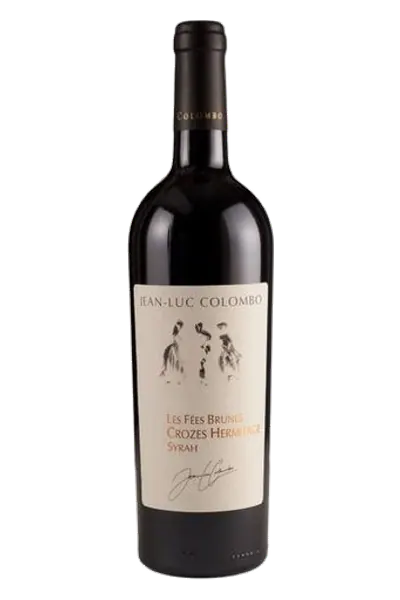
Crozes-Hermitage Les Fées Brunes is Syrah from Crozes-Hermitage, the larger appellation around the hill of Hermitage. Jancis Robinson says the first vintage was in the early 2000s, from vines on both the granite slopes and the alluvial flats by the river. A Canadian retailer says the vines are over 40 years old.
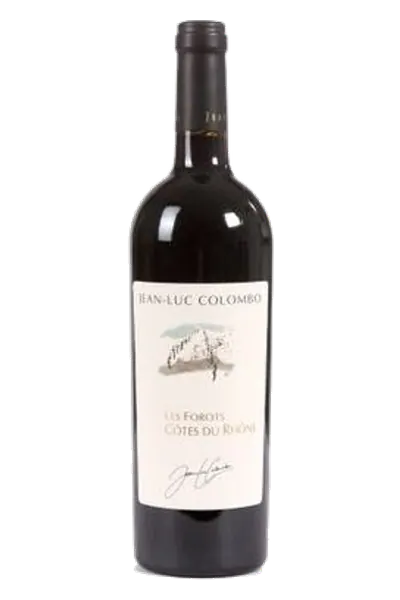
Côtes du Rhône Les Forots is labelled Côtes du Rhône. Decanter, writing in the early 2000s, said it came from 60 year old Syrah vines just outside the Cornas boundary, which is why it can't be called Cornas. The family's current US importer describes it as Syrah and Grenache from contrasting sites.