History
La Horra is the Ribera del Duero project of the people behind Bodegas Roda in Haro. After a long search for the best place to grow Tempranillo outside Rioja, Grupo Roda chose the vineyards of La Horra, in the province of Burgos, and founded the bodega in 2009. Its partners are Pedro and Pablo Balbás, who grow grapes in La Horra and Roa de Duero.
The winery was built in three stages. The first was a building to make the early vintages of Corimbo and Corimbo I. The second, finished in 2015, added the barrel cellar and bottle store. The third began in 2023 with Carme Pinós, winner of Spain's National Architecture Prize, and the finished bodega opened in June 2025. It was her first winery. The investment came to 9.5 million euros, and Mario Rotllant called it sustainable and highly energy efficient.
The wine's name comes from the corymb, a flower head made of many small flowers. The team chose it as a picture of how it works together.
Grapes, vineyards and winemaking
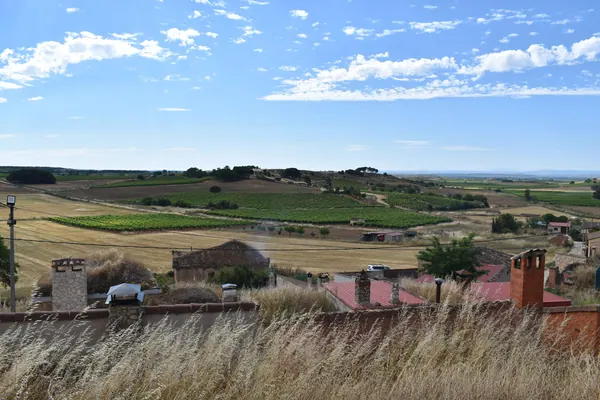
The estate covers 25 hectares of vineyard and pine forest north of the Anguix road. The rest of the vineyards are spread across Roa, Anguix, La Aguilera and Quintana del Pidio, between 800 and 870 metres. That height means hot days, very cold nights and a short growing season. Agustín Santolaya describes the landscape as hills of poor, chalky soil topped with pine woods and full of wild herbs, and says the wines aim for elegance and freshness.
The new winery is half buried in a hollow dug into the estate's south facing slope. It works by gravity, uses the natural cool of the ground, and moves air through vents modelled on the old village cellars of the area. Its roof is a single huge concrete slab that follows the contours of the hill and is being left to grow over with native plants.
It's Tempranillo only. Corimbo comes from vines averaging about 25 years old in La Horra and Roa, on limestone and chalk. Corimbo I comes from older vines, bush trained, more than 50 years old in La Horra. The importer's technical sheet for Corimbo 2019 gives 14 months in oak, 80% French and 20% American.
Farming and how it's run today
Grupo Roda says the vineyard is farmed for biodiversity with as little intervention as possible, and describes Corimbo and Corimbo I as reds with organic roots. Recent vintages are sold in the Netherlands as "Corimbo BIO".
Wines we stock
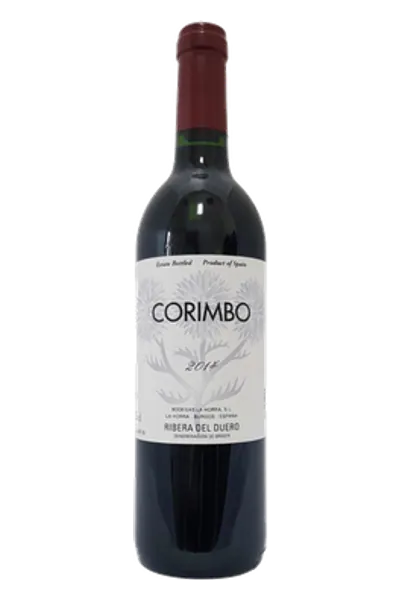
Corimbo is the main wine: 100% Tempranillo from vines of about 25 years in La Horra and Roa.
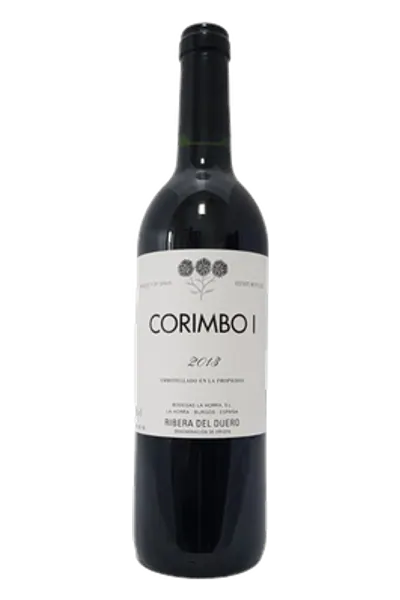
Corimbo I is the top wine, from old bush vines in La Horra, more than 50 years old.